Service
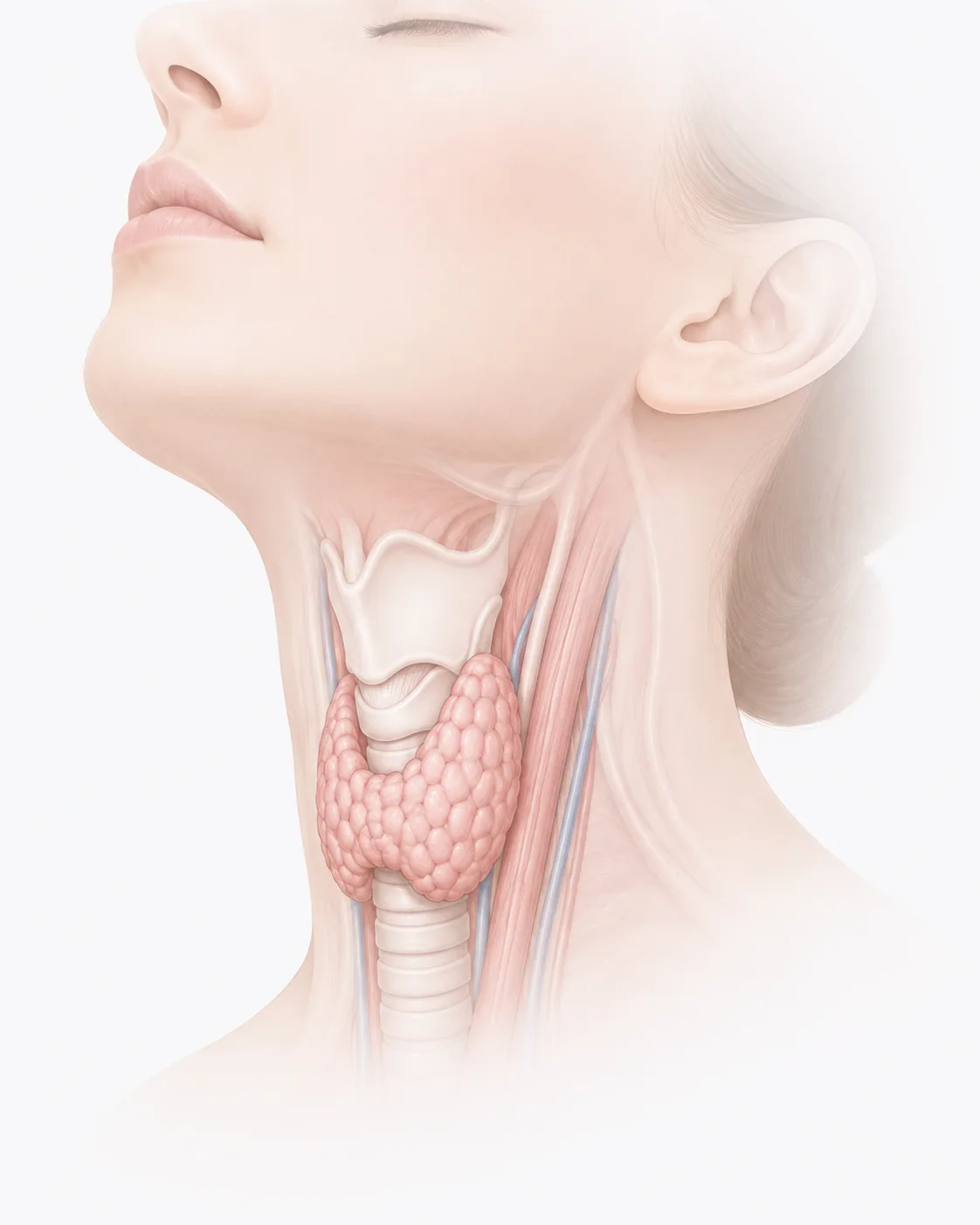
Surgical removal of part (lobectomy) or all of the thyroid gland through a neck incision. The extent of surgery is determined by diagnosis, with particular attention to protecting the nearby nerve controlling the voice and the parathyroid glands that regulate calcium.
Benefits

Thyroid nodules or function are assessed with ultrasound, bloodwork, and sometimes a needle biopsy to guide the surgical plan.
Performed under general anesthesia, through an incision in the natural skin crease of the neck.
Part (lobectomy) or all of the thyroid gland is removed, with the extent matched to the diagnosis, while carefully protecting the nearby voice nerve and parathyroid glands.
The incision is closed and calcium and voice function are monitored closely in the following days.
Good candidates
Discuss alternatives if
A short hospital stay allows calcium levels and voice to be monitored closely.
Neck stiffness or a hoarse voice can occur and generally start to ease.
Most normal activities resume, with the incision continuing to fade.
If the whole thyroid was removed, lifelong hormone replacement is started and monitored.
Risks & Important Considerations
The main risks are injury to the nerve controlling the voice and disruption of the parathyroid glands that regulate calcium, alongside the general risks of bleeding and infection. These are discussed individually, including how the extent of surgery — partial versus total — affects the likelihood of each.
Book a personal consultation with Dr. Zogaj.