All Services

Service

Laryngomicroscopy (LMS)

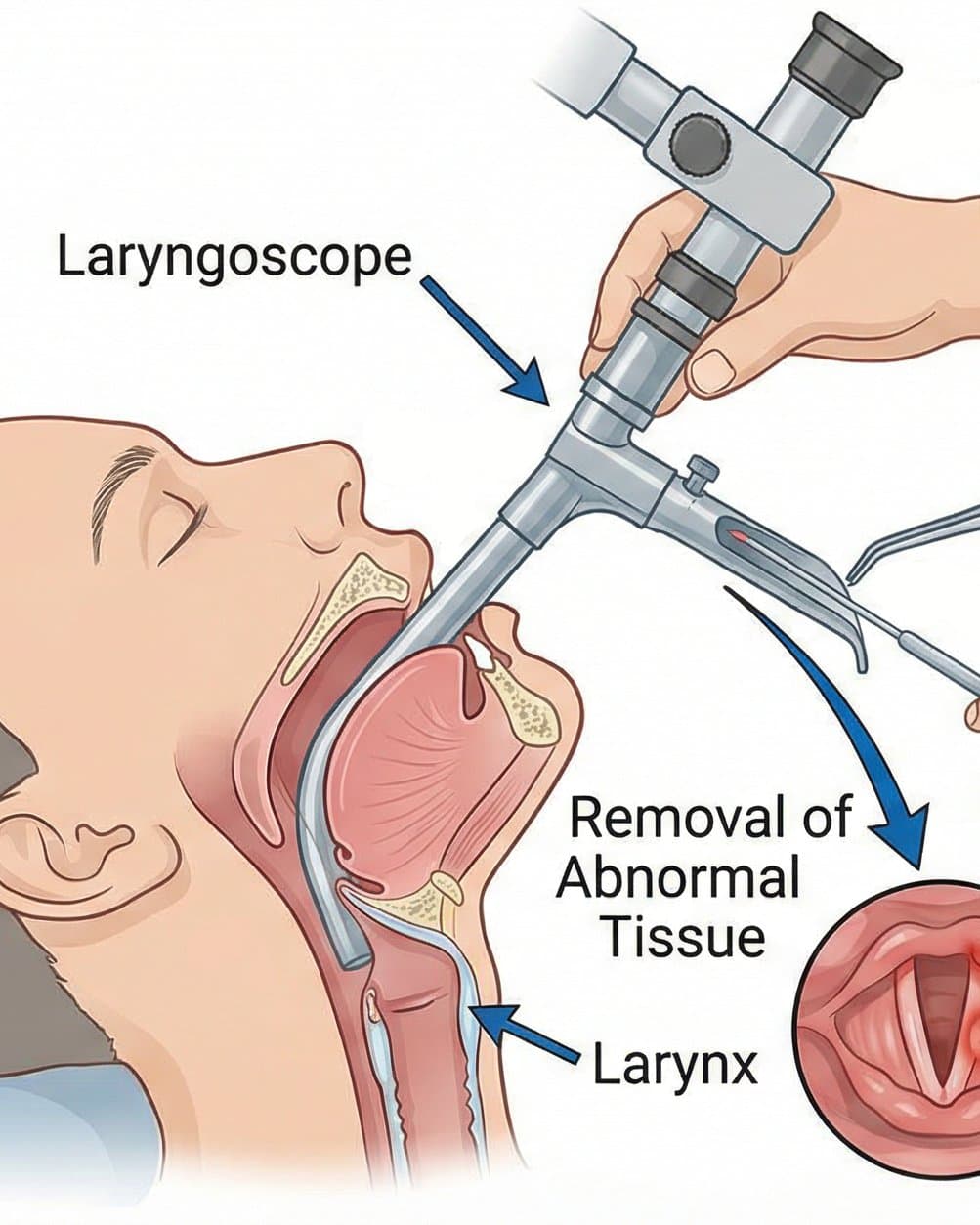
A direct examination of the vocal cords performed under general anesthesia, using a rigid laryngoscope together with an operating microscope for high-magnification visualization. This allows precise removal or biopsy of abnormal tissue in the same session.

Benefits

  • High-magnification, direct visualization of the vocal cords
  • Precise removal with minimal trauma to surrounding tissue
  • Biopsy and treatment often completed in a single session
Laryngomicroscopy (LMS)

How It Works

01

Pre-procedure Evaluation

The vocal cords are examined, often with a scope in-office beforehand, to plan the areas needing biopsy or treatment.

02

Anesthesia

Performed under general anesthesia, since the procedure requires the vocal cords to stay completely still.

03

Direct Microscopic Examination

A rigid laryngoscope combined with an operating microscope gives a high-magnification, direct view of the vocal cords.

04

Precise Treatment

Abnormal tissue is removed or biopsied with fine instruments, often completing diagnosis and treatment in the same session.

Good candidates

  • Vocal cord polyps, nodules, cysts, or leukoplakia are suspected or confirmed
  • A vocal cord lesion needs biopsy to confirm its nature
  • Voice changes have persisted despite voice therapy or rest

Discuss alternatives if

  • An active upper respiratory infection is present at the time of surgery
  • General anesthesia carries elevated risk given your overall health

Preparing for Your Procedure

A pre-operative voice or laryngeal exam is completed
Fasting instructions before general anesthesia are followed
Arrange a ride home, as this is typically outpatient surgery

Recovery

First 24–48 hours

Mild throat discomfort or hoarseness is common as the vocal cords settle.

First week

Voice rest is advised — limiting talking, whispering, and throat-clearing — to support healing.

1–2 weeks

Voice quality typically returns to its expected baseline.

Risks & Important Considerations

Risks include temporary or, rarely, more lasting hoarseness, bleeding, and a small chance of dental or lip injury from the instrument. These risks are low overall and are discussed individually based on the reason for the procedure.

Start with a Consultation

Book a personal consultation with Dr. Zogaj.

Every treatment begins with an open conversation. Goals, realistic options, and a suitable plan are discussed — with complete confidentiality and no pressure.