Service
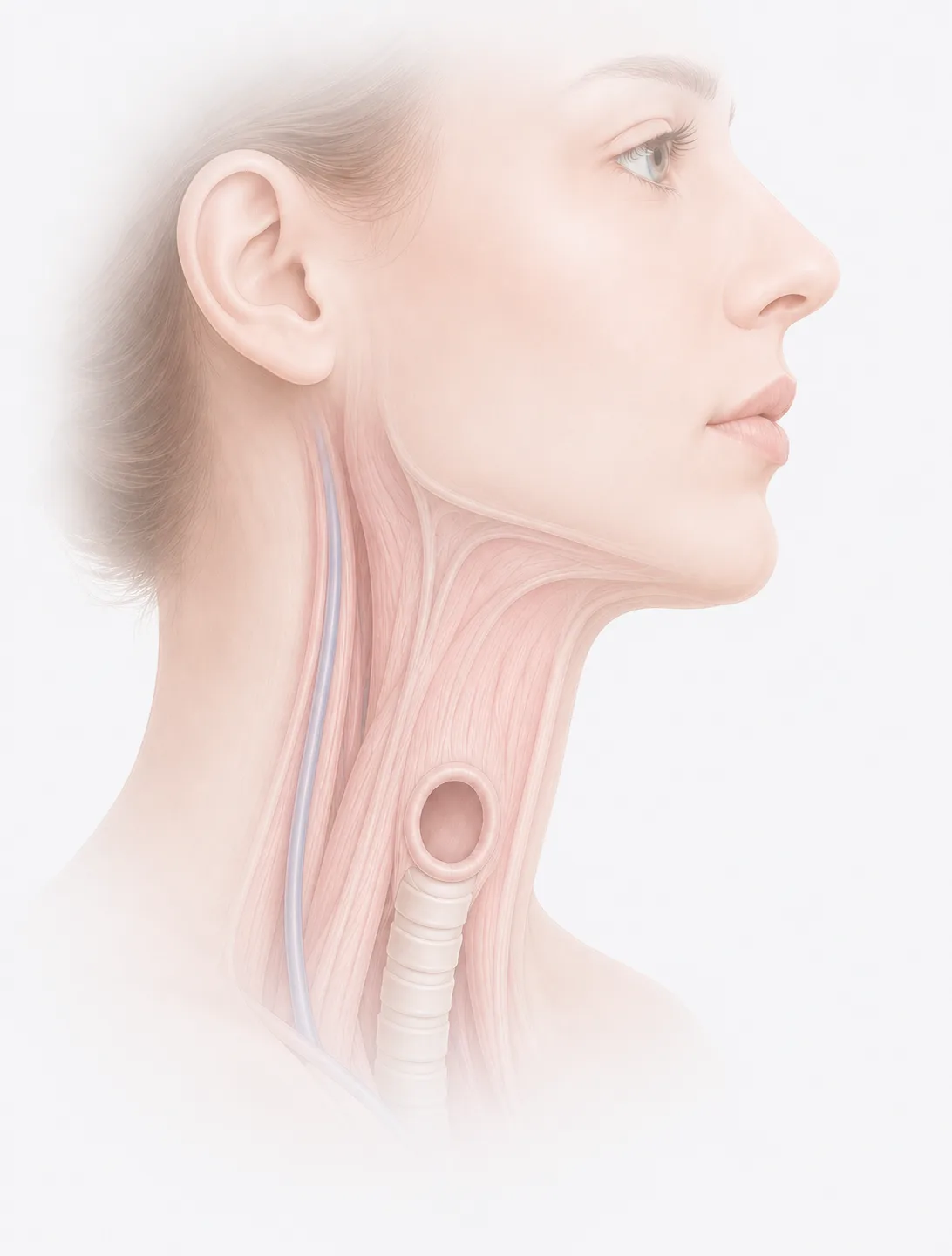
Partial or total removal of the larynx, most often performed as part of treatment for laryngeal cancer. The approach is planned individually to address the disease while preserving as much natural voice and swallowing function as possible.
Benefits

Imaging and biopsy confirm the extent of disease, and the surgical plan — partial or total — is developed together with the broader oncology team.
Performed under general anesthesia in a hospital setting.
Part or all of the larynx is removed according to the plan, aiming to address the disease while preserving as much natural function as possible.
Breathing and swallowing pathways are reconstructed as needed, and voice rehabilitation begins as part of recovery.
Good candidates
Discuss alternatives if
A hospital stay of around 10–14 days is typical following surgery.
Healing continues at home, with support for breathing through a stoma and swallowing as needed.
Voice rehabilitation — such as a voice prosthesis or esophageal speech — is introduced as part of ongoing recovery.
Follow-up continues with the oncology team to monitor recovery and overall health.
Risks & Important Considerations
This is major surgery with life-changing effects, particularly after total laryngectomy, including permanent changes to breathing (through a neck stoma) and voice. These changes, along with the surgical risks of bleeding and infection, are discussed in full detail as part of planning — this decision is made together with you and your oncology team, not taken lightly.
Book a personal consultation with Dr. Zogaj.